

Expanding access to world class cancer treatment
At Scandinavian Care Group, we design, build, and operate modern cancer centers that deliver accessible, personalized, and high-quality care. With more than 25 years of global experience and deep partnerships with leading hospitals and technology providers, we combine Swedish medical expertise with advanced radiotherapy and radiosurgery solutions to ensure the highest standards of treatment.
By working closely with international and local partners, we increase access to essential cancer care in regions where treatment capacity is limited. Our integrated model covering investment, development, and operation enables us to deliver sustainable, patient focused cancer centers that make a meaningful impact on patients’ lives while supporting long term value creation for our partners and investors.
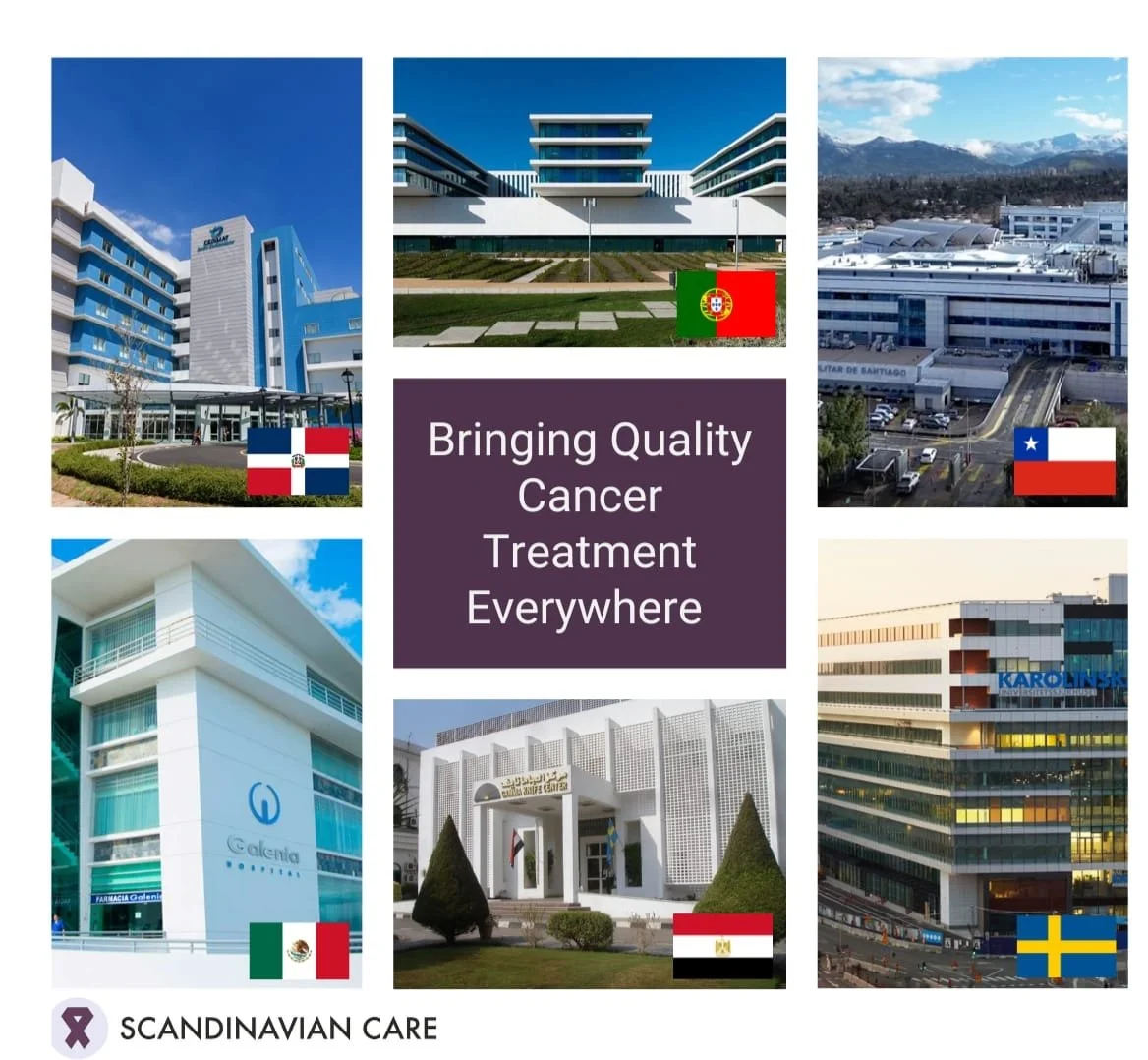
Our investment projects
Scandinavian Care Group has successfully delivered investment and consultancy projects worldwide, establishing advanced cancer centers across Africa, South America, Europe, and the Middle East. We are committed to providing innovative healthcare solutions tailored to diverse regional needs. From designing facilities equipped with radiotherapy technologies to training local medical professionals, we ensure each center meets the highest standards.

Sustainability
Scandinavian Care Group’s corporate responsibility focuses on ethical practices, social impact, and environmental sustainability. We uphold integrity and transparency, improve healthcare access through cancer centers in underserved regions, and invest in local development. By adopting eco-friendly technologies and reducing waste, we ensure our operations align with sustainability, combining ethics and innovation to transform global cancer care responsibly.
Cases of cancer per 100.000 population
Cancer is a leading global health challenge, with approximately 19.3 million new cases and 10 million deaths annually. Lung, breast, colorectal, and prostate cancers are among the most common, with incidence rates varying widely across regions due to factors like aging populations, lifestyle changes, and healthcare access. While high-income countries report higher rates due to advanced diagnostics, low- and middle-income countries are experiencing a surge driven by lifestyle shifts and limited preventive measures. Key contributors include smoking, obesity, and inactivity, though initiatives like HPV and hepatitis B vaccinations and early screening have shown promise in reducing specific cancer types. By 2040, global cases are projected to reach 28 million, emphasizing the need for prevention, equitable treatment access, and healthcare improvements worldwide.
